Live eventJune 18Build Your Portfolio with AIGet ticket →

Community · No-code · iOS & Android · 2021 – present

One post. One call.
One community.

This started as a learning project. That turned out to be a product strategy.

An app that launched with 5 Product Hunt upvotes and grew to 4,618 downloads and 6,847 newsletter subscribers. All organic.

Monthly downloads grew 4x after the December 2023 redesign. The Luma community reached 2,157 members across 25 events and 1,504 tickets in just over two years. No paid acquisition. No agency. No dev team.

The 22-hour first version was not a shortcut. It was a research method.

Role

Founder, Product Owner, UX/UI Designer, Community Builder

Timeline

May 2021 – present
First version: 22 hours

Stack

Figma · Bravo Studio · Airtable · Tally · PHP · API · Luma · n8n

Platforms

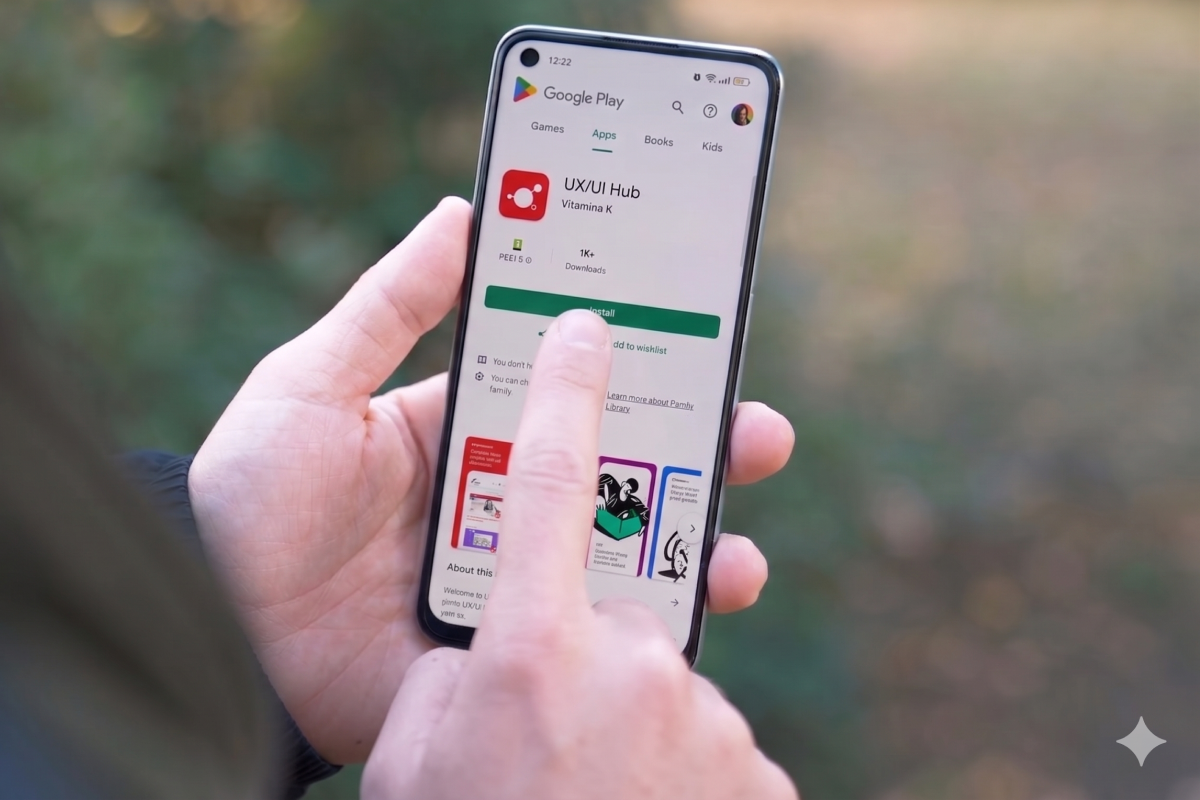
iOS App Store · Google Play · Substack · LinkedIn · Web

Skills

Community Building Product Strategy UX Research Leadership Event Programming App Store Optimization (ASO)
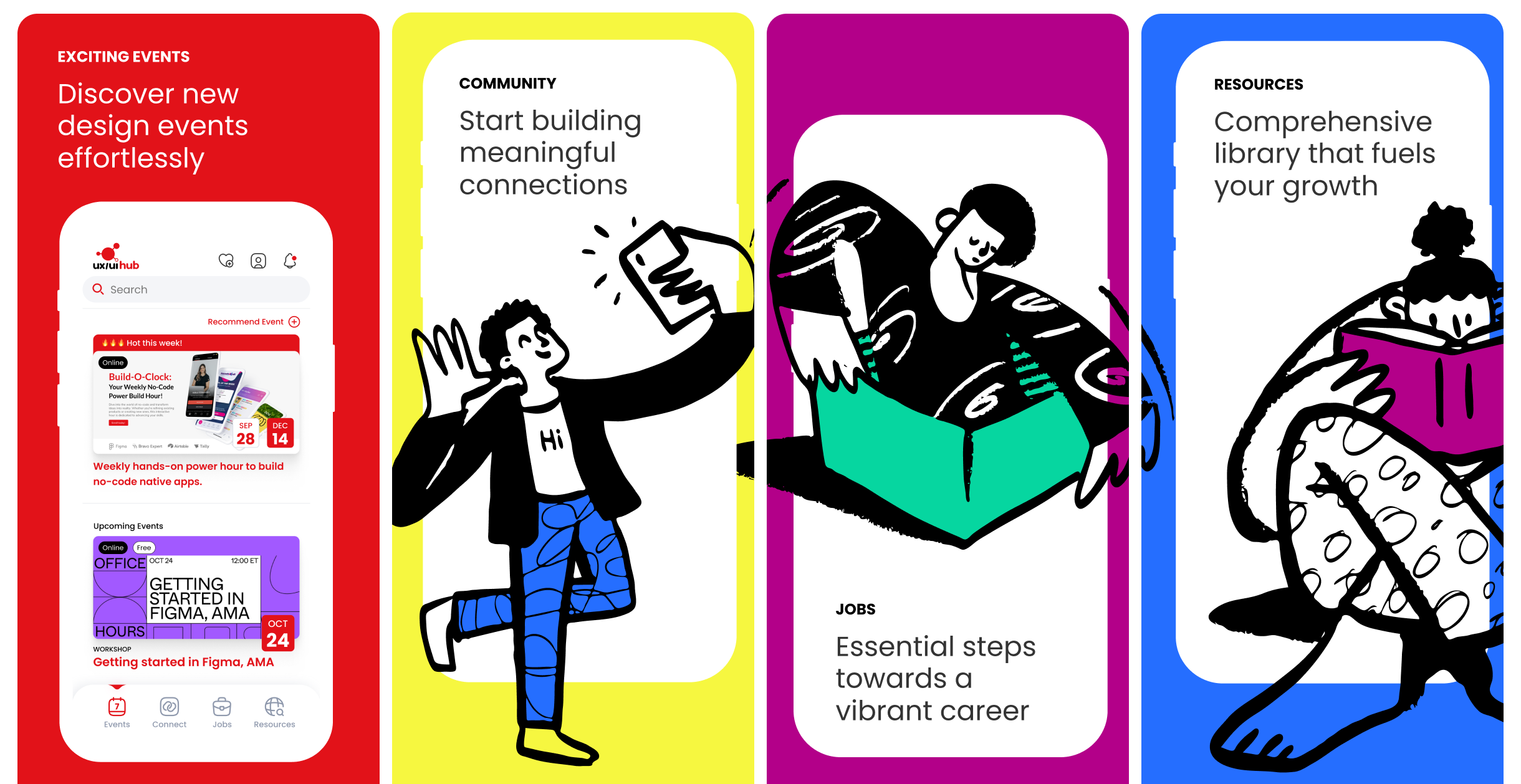
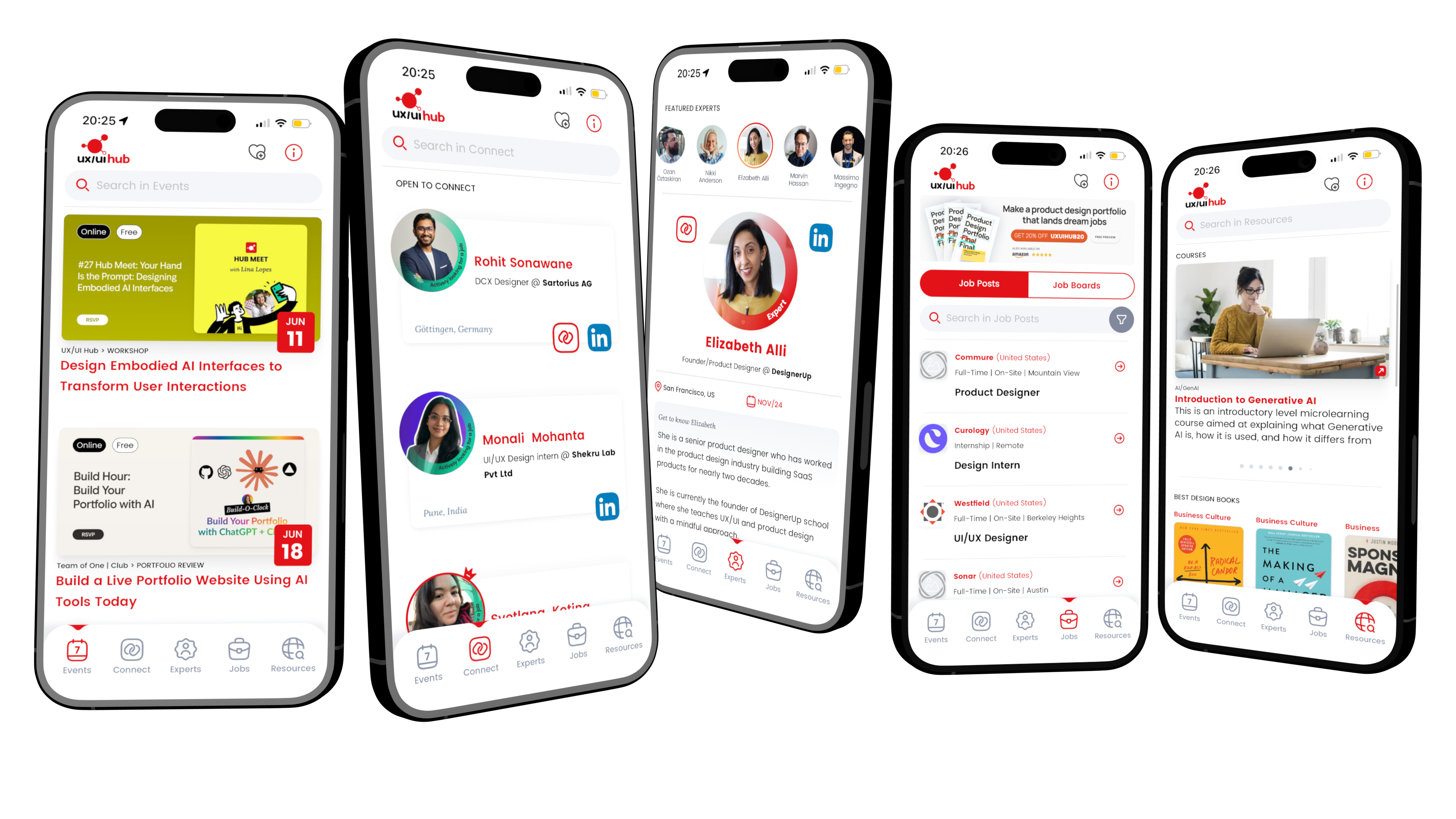
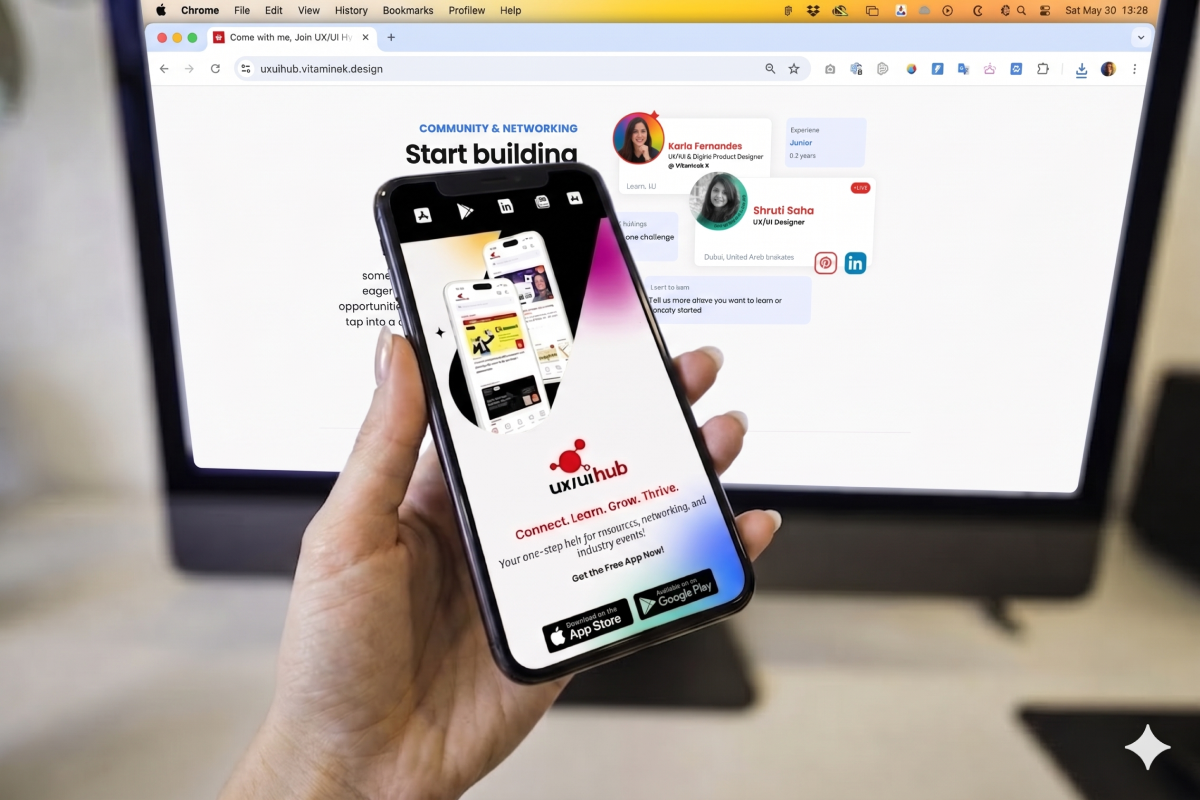
UX/UI Hub app — events, resources, and community for designers

22h

First version built
and live on both stores

4x

Monthly download growth
after December 2023 redesign

2,157

Luma community members
across 25 events

6,847

Newsletter subscribers
Substack 3,724 · LinkedIn 3,123

01 — The Idea

I built this to learn. The idea came from someone else's traction.

In 2021 I was teaching myself to build native apps with no-code tools. Not to launch a product. To understand what was possible. Every app I shipped taught me something. I was collecting evidence.

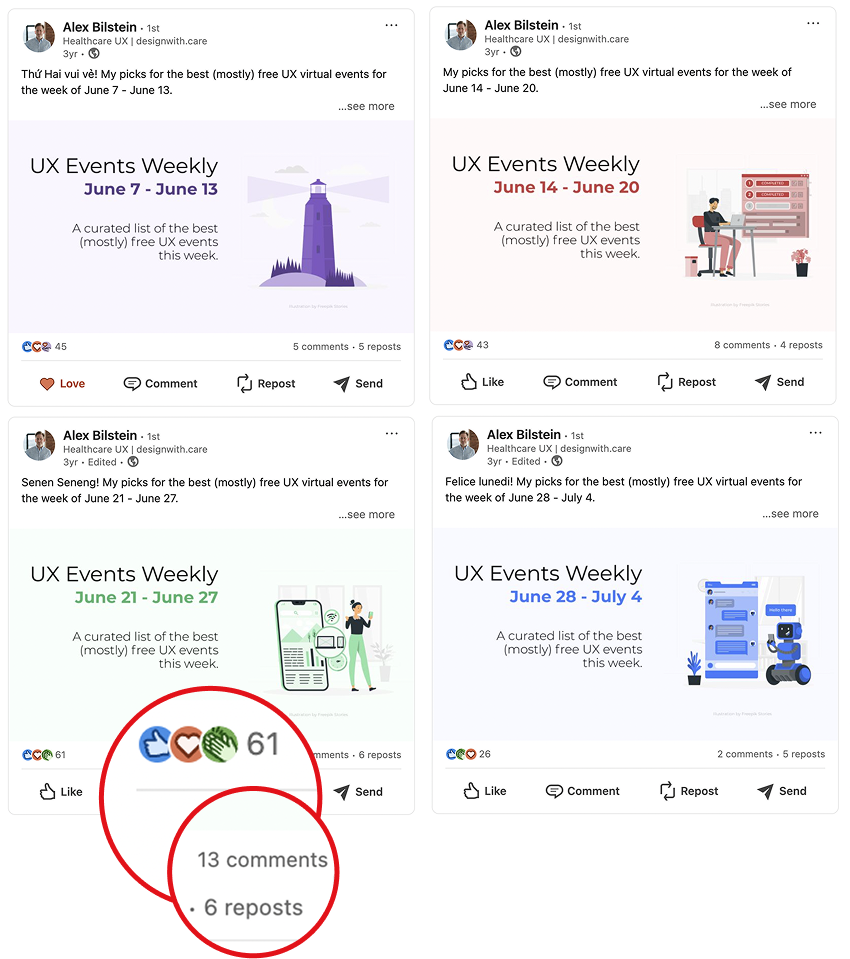
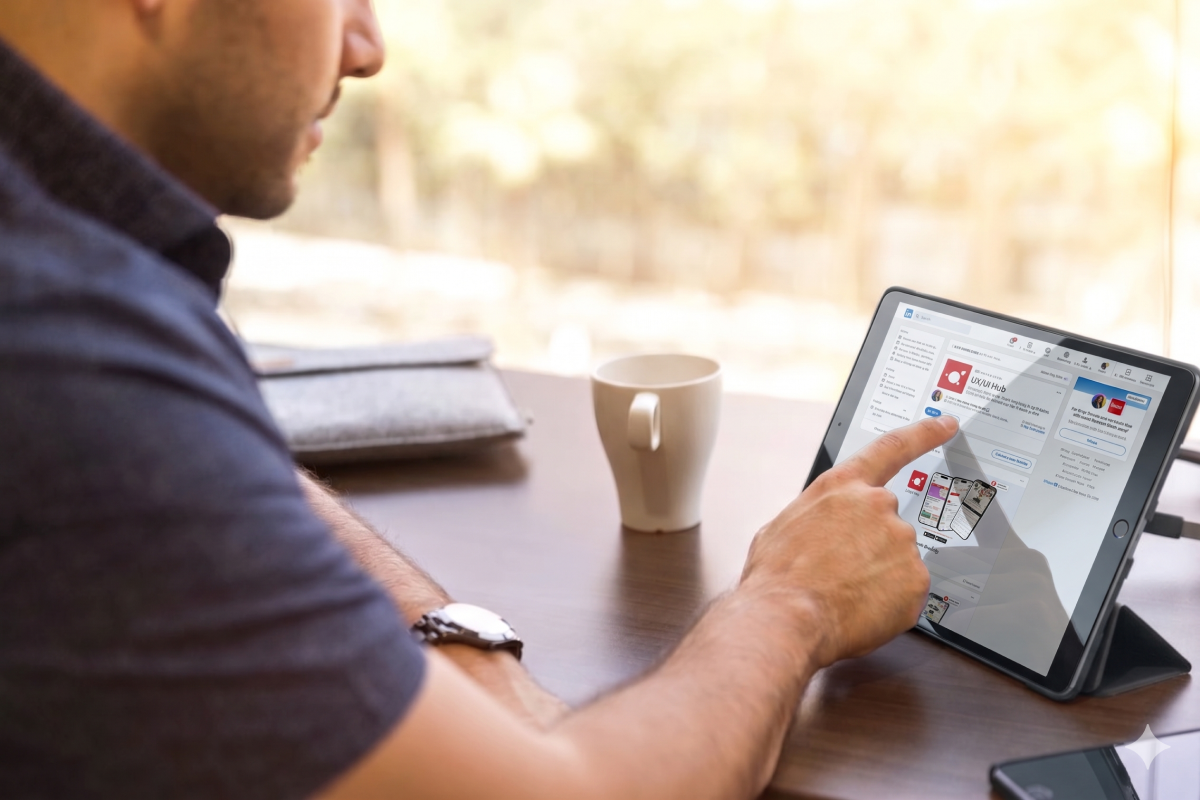
Then I saw Alex Bilstein posting weekly UX event roundups on LinkedIn. People loved it. They commented, reposted, consistently engaged. I spotted the pattern, sent him a message, and we had a 30-minute call. For me it was a validated idea, and asking would cost me nothing.

He already had the events in Airtable. I created a Figma draft and in Bravo Studio, connected the database in an hour. Built the app in 16 hours. Published live on both the App Store and Google Play. The whole first version: 22 hours, no developers, no sprint planning, no waiting.

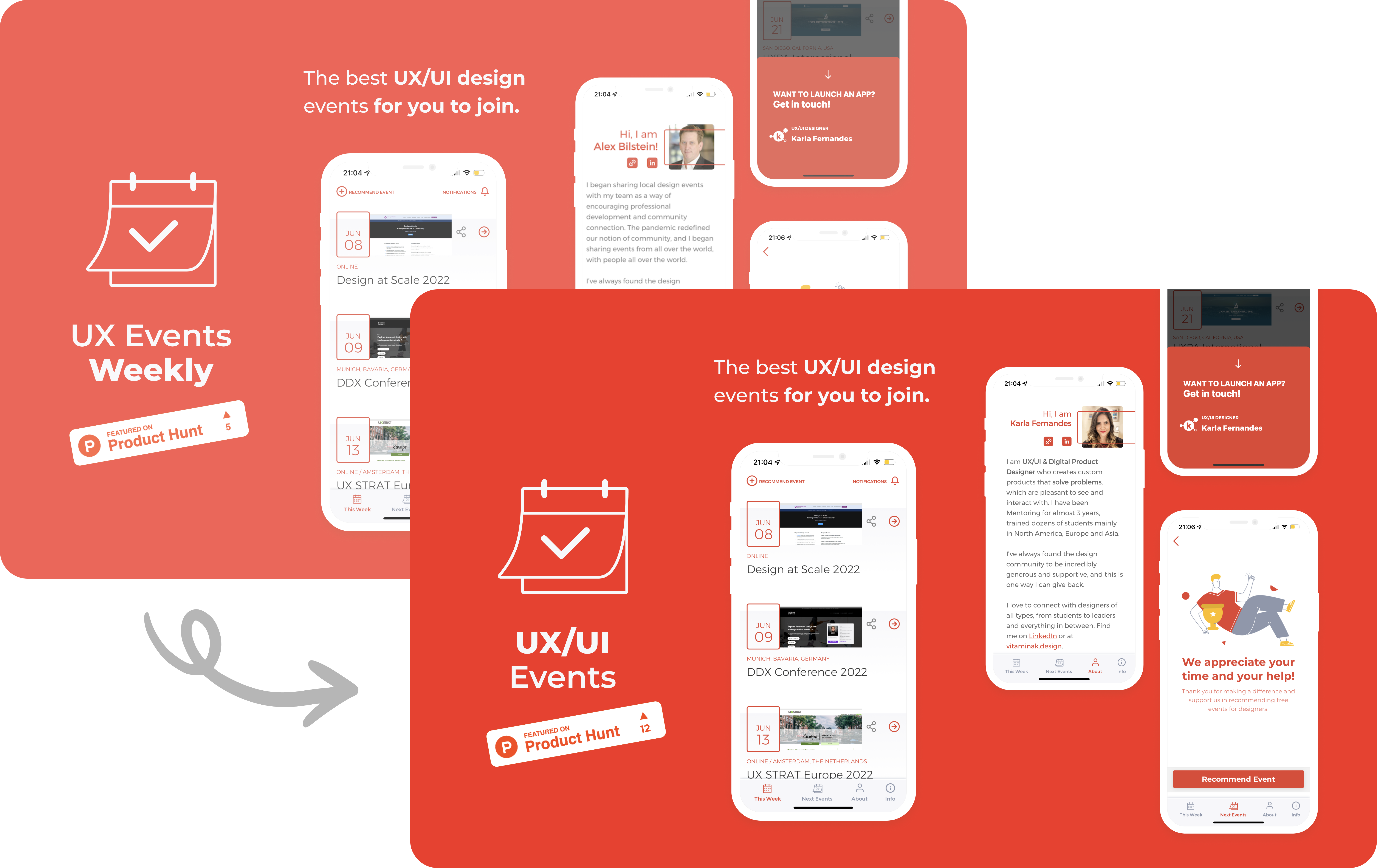
It launched as UX Events Weekly on Product Hunt with 5 upvotes. It listed events. Nothing else. That was the point. Mission accomplished.

Alex Bilstein's LinkedIn posts — the UX event roundups that sparked the idea

02 — Early Growth

32 months of growth
with almost no work.

I moved on. I had other products to build, skills to sharpen. UX Events ran on Airtable and good intentions, and I barely touched it after launch.

Alex moved on to healthcare work, I took over the project, changed the name to UX/UI Events, and added notifications. Half a day of work. In all of 2022, I spent four and a half hours on the app total.

By November 2023 it had 1,182 downloads, growing at roughly 37 users a month with no marketing spend and almost no updates. Simple product. Real problem. People found it.

But 1,000+ users is also the moment to stop and actually listen.

The app was a good event list. The gap was everything else those users were looking for, and not finding anywhere.

29 months to 1,000 iOS 887 · Android 167 Zero paid acquisition
iOS
Android
Road to 1,000: cumulative iOS (887) and Android (167) downloads. Milestone reached September 2023 after 29 months.
"Ship the simple version first. Not because good enough is fine, but because you cannot design for needs you have not yet heard." — My vision on v1
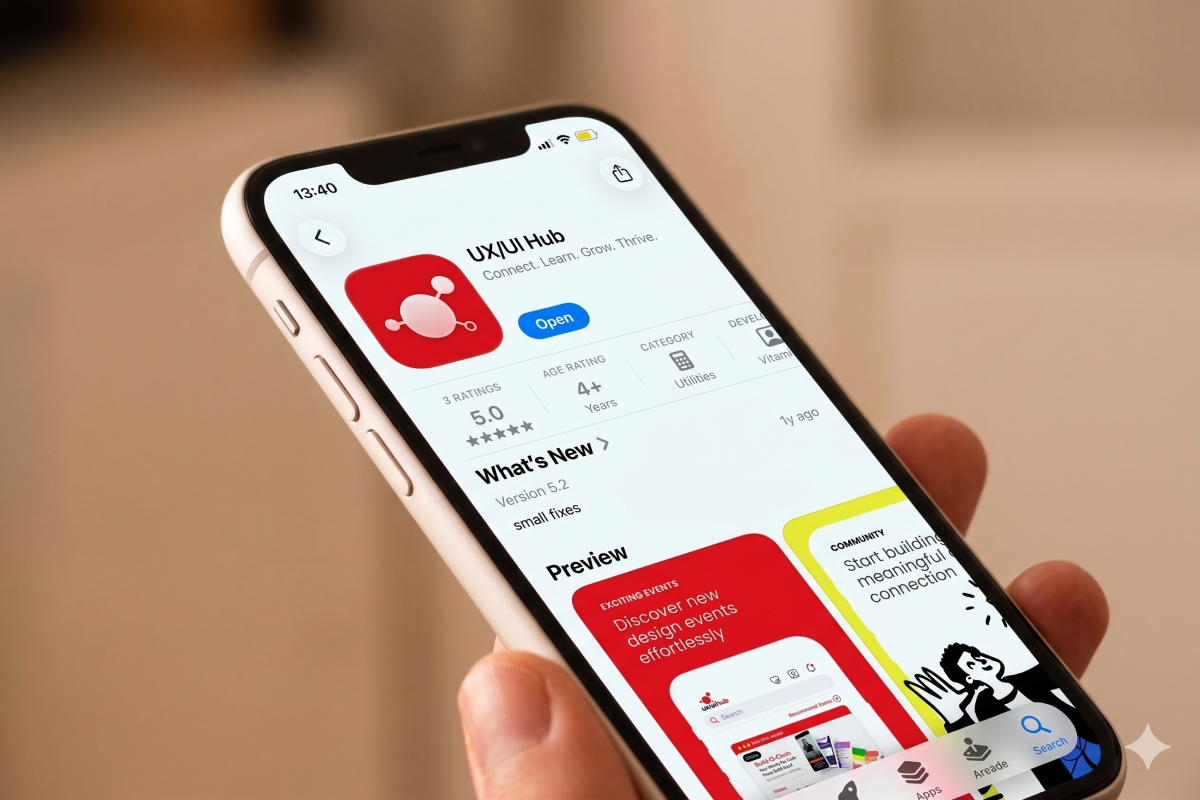
UX Events Weekly — the original app

03 — The Research

The research said: learning first, social second.

I brought in three collaborators for a focused research sprint spanning mid-2023. Gabriella Davis and Peggy Yang ran a screener survey with 18 respondents, five user interviews with bootcamp students, recent graduates, and junior designers, and a competitive analysis across Supermomos, Meetup, and UX Jobs Board. Katerina Sevcovic researched and wireframed the landing page, running two rounds of usability testing with eight participants. Later in the year, Kell Egbert led a dedicated research sprint on the Resources section, running a competitive benchmark analysis, an industry leader study, and card sorting exercises with real users that produced the information architecture foundation for the tab.

73.7%

said networking is essential for career advancement

14 of 19 respondents · directly validates the networking need

Who responded

Beginning
4
In the middle
7
Finishing up
4
Graduated
4

All were living the problem in real time

"I don't expect to find a job with only one project under my belt, but it will be good practice for the future. Also, you never know what opportunities will come your way unless you put yourself out there." Analise · Mid-bootcamp · Survey respondent

15 of 19 respondents · check several times a week or more

Three needs came back clearly from the interviews: help me finish my bootcamp, help me network with other designers, help me find a junior job.

The research team proposed a social-first direction: feeds, messaging, location filters. I redirected. The competitors already owned social. What they did not have was a focused learning and career resource hub for junior designers. That was the gap.

The original app addressed none of the three needs. It was a good event list. The redesign could only be that precise because the research had been that specific.

When research recommends a direction, the product decision is still yours. That is not a limitation of the research. That is how it is supposed to work.

"I had a great time working with Karla. She encourages collaboration by creating a welcoming environment for any and all ideas. She motivated me to think critically and explore problem areas from a new perspective." Read her case study →
Gabriella Davis Gabriella DavisUX/UI Designer, Atlanta, US
"Working with Karla, I realized the importance of aligning design with business goals. She challenged me to view my projects from various angles. Her feedback contributed to refining my skills and building my confidence." Read her case study →
Peggy Yang Peggy YangUX/UI Designer, New York, US
"Karla's exceptional ability to teach and share knowledge demonstrates not only her technical expertise but also her natural talent for mentorship. Her perfect balance of technical proficiency and interpersonal skills makes her an invaluable mentor."
Kell Egbert Kell EgbertSenior UX/UI Designer, Tampa, US
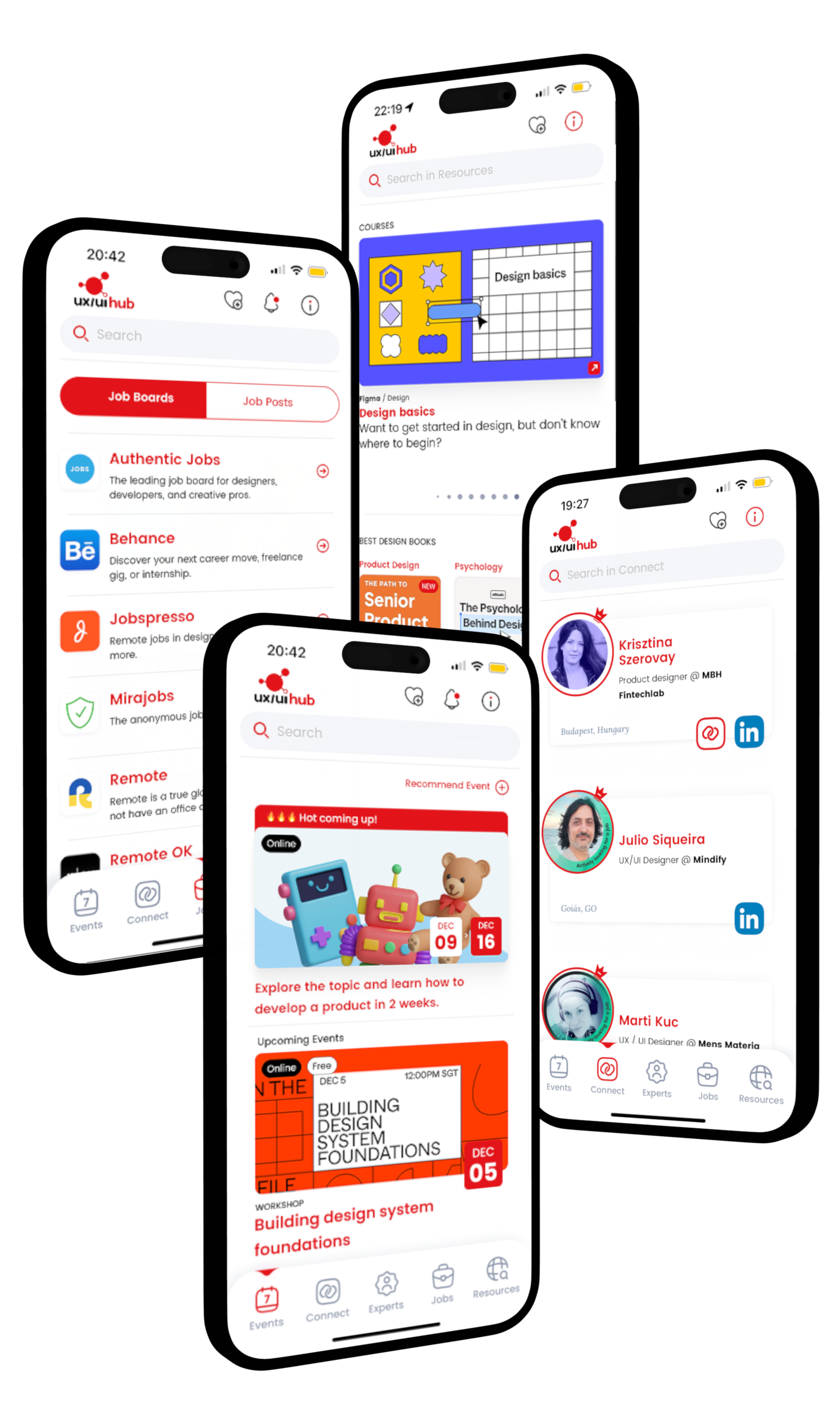
UX/UI Hub v2 app screens — events, resources, connect, jobs

04 — The Rebuild

The rebuild took 60 hours. No developers.

December 2023. Same stack: Figma, Bravo Studio, Airtable. New features: login, profile creation, a connect area for designers to find each other, job boards, and a resource library with almost 400 items.

I've also included banner areas in the app for partners and sponsors. Banners averaged 0.26% CTR (reaching 0.51%): more than double the industry standard of 0.1%.

Third Product Hunt launch: 25 upvotes. Now, UX/UI Hub. Five times the first. Still not viral. Still mission accomplished.

Total time invested from first launch to the December 2023 release: under 60 hours 56 minutes across almost three years. No engineering team. No agency. No long sprints.

Constrained execution teaches you what to cut and what actually matters. Give me an engineering team and a sprint cadence, and that discipline doesn't disappear. It ships faster.

05 — The Numbers

Monthly downloads went from 37 to 140+

In the 32 months before the update: 1,182 downloads. In the 7 months after: 983 new downloads. Monthly rate went from 37 to over 140. Close to four times faster, in less than a quarter of the time.

In May 2024 I added a simple analytics layer. Job boards dominated immediately: nearly 900 clicks in the first month, then events, books, challenges. The data confirmed the redesign priorities and made the next decisions obvious.

4,618

Total downloads

68% from App Store Search

727

Android installed users

4.31 stars overall / 15.7% from Google Play

144

Countries reached

All organic discovery

5

Google Play rating

Last 28 days

4x

Monthly download growth

37 → 140+ after redesign

$0

Paid acquisition spend

All 4,618 downloads organic

iOS 3,891 downloads
Android 727 downloads
Both platforms
No downloads

iOS: App Store downloads by country, Apr 2021–May 2026. Android: Google Play store listing acquisitions by country. Active Android users: 727. All organic.

Community portrait
In-app profiles
302
created a profile in the app
Actively job searching
82%
from users with profile in the app
Open to connect
97%
from users with profile in the app

06 — The Community

Then I built
the community.

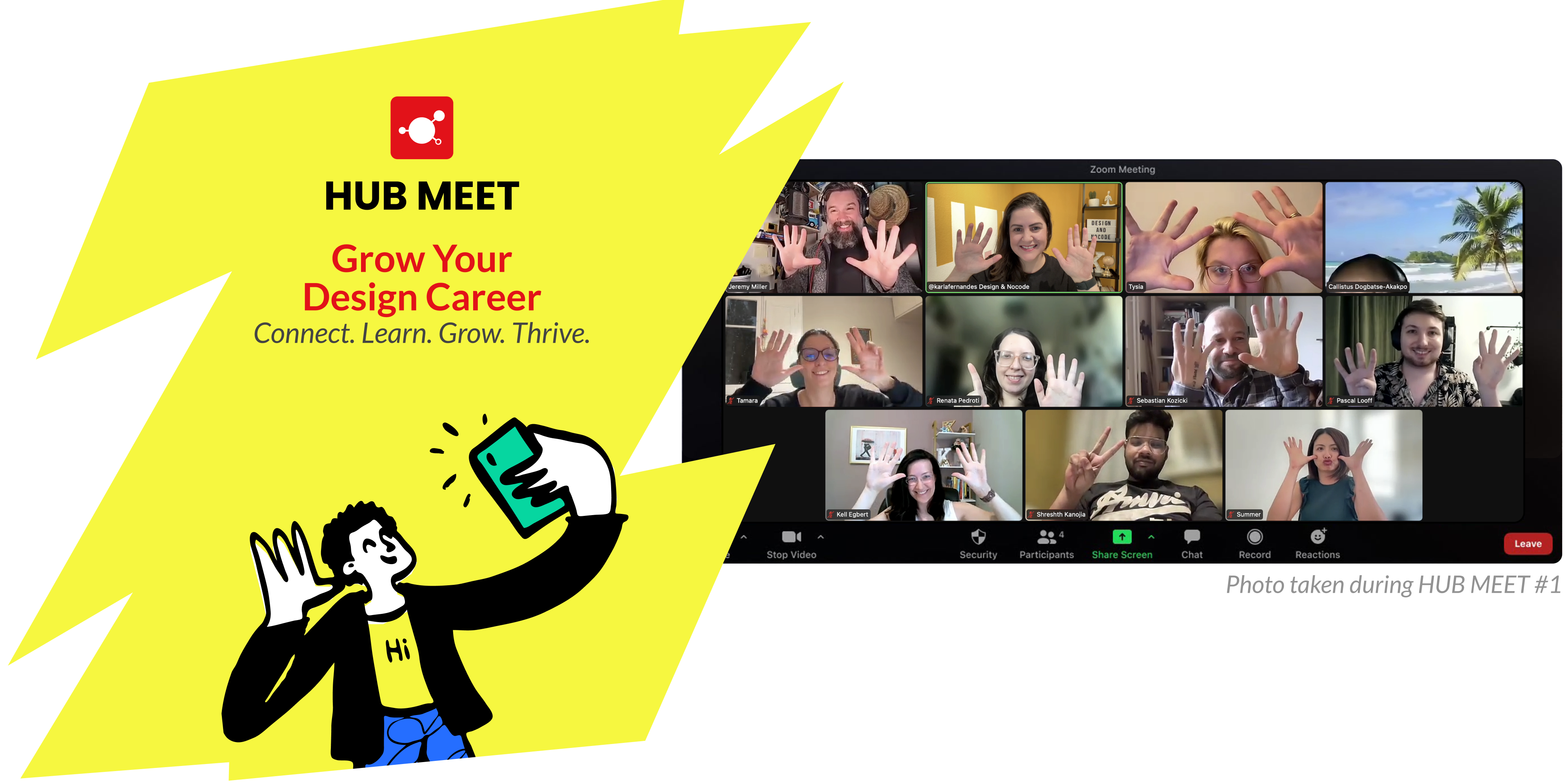
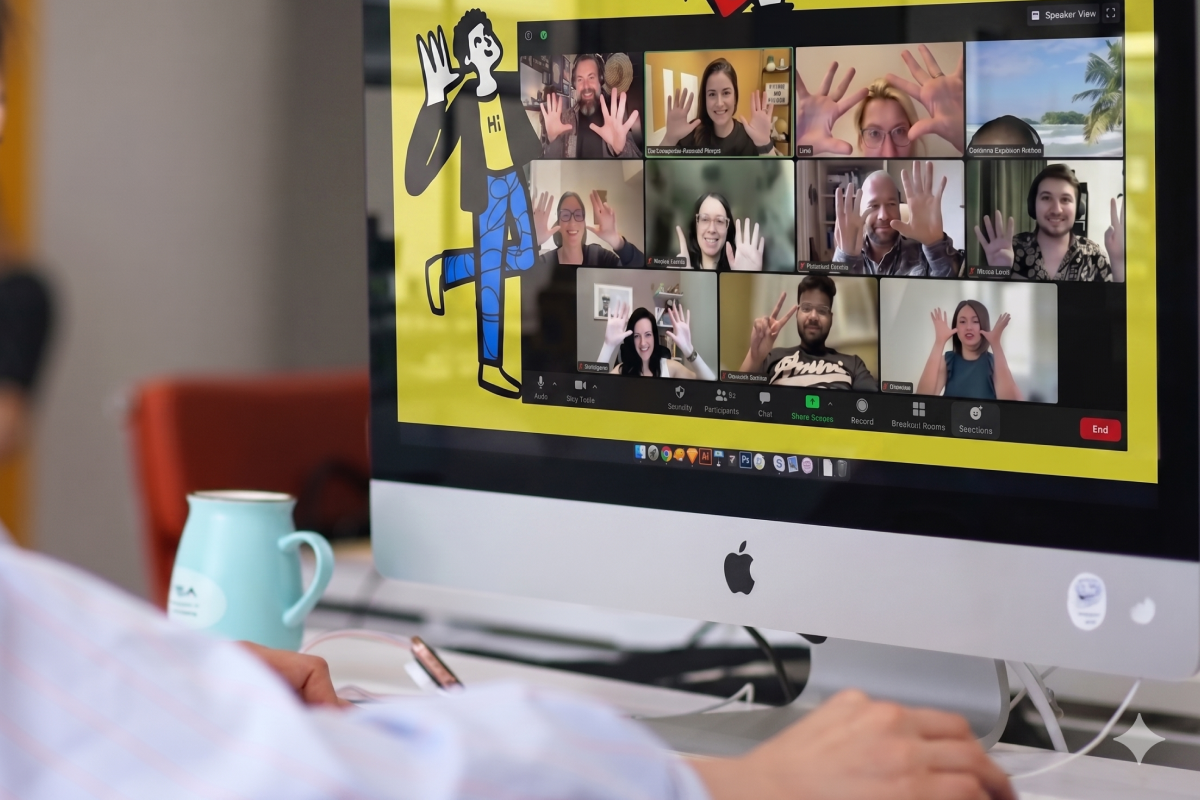
In April 2024, the first Hub Meet went live. Free, online, 29 guests, one hour with the goal of connecting designers. Then Hub Meet #4 brought in 45 attendees with a session on AI techniques for the design job search. #5 and #6 drew 27 and 35. The topics sharpened from there: portfolio anatomy, LinkedIn strategy, career AMA sessions, AI workflows for designers.

Relevant topics. A predictable Thursday. That was the whole formula. Some months brought over 400 new members in a single month.

“Karla has a talent for finding subjects and speakers that just happen to be what I need.”
Nirmal Dhiman
“The event was amazingly fulfilling — the energy and opportunities really brought a lot of confidence.”
Mykyta Pysarevskyi
“Every webinar is packed with value, I try not to miss any, and the app is super clear and straightforward!”
Marta Vadilonga
Hub Meet events — online sessions for the UX/UI design community

By May 2026: 25 events, 1,504 tickets, 2,157 Luma members. In just over two years.

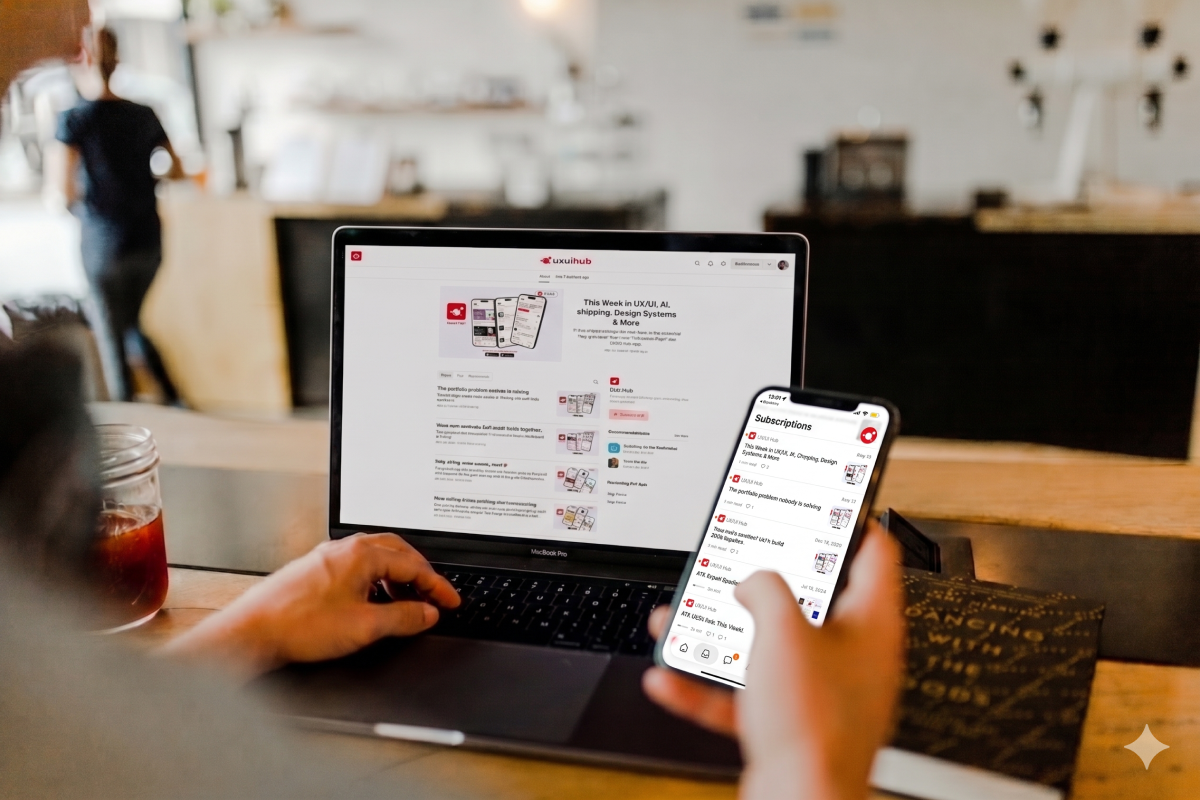
The newsletter runs weekly: 6,847 subscribers total across Substack (3,724) and LinkedIn (3,123), 70+ issues, featured in four other design publications. Events, resources, jobs, expert insights. Free. Every Monday for over a year.

For a period, Sebastian Kozicki supported the app by manually adding new events: creating images, managing data, and updating the database. That process now runs through n8n. I publish or archive events based on what I think will matter most to the community.

All of it runs on one stack. Figma, Bravo Studio, Airtable, Luma, and now with n8n for automating event sync (finally removed one task!). One person.

The community grew because the content was useful and the format was consistent long enough. Nothing else. No growth hacks. No virality strategy. Show up every week with something valuable.

Events
25
Apr 2024 – Jun 2026
Community members
2,157
Luma platform
People in events
257
unique live attendees
Avg joined live
32.8%
of registered guests
Came back 2+
37.1%
287 people
Attended 5+ events
49
loyal community core
Newsletter opt-in / event
31.7%
avg across #12–#25
Donations received
$22
4 events · all voluntary
Guests registered per event — first 25 events
Job Search
Freelance
Learning
Network
Avg 50


Then the community
started improving the product.

In 2025, Miranda Slayter ran Why Before UI: a design challenge where I asked how her community members would redesign the Resource section of the UX/UI Hub app. Too much content, not enough structure. Ten designers entered.

I reviewed ten solutions for UX thinking, no-code feasibility, and real user alignment. Neer's solution won — chosen for structural clarity and realistic implementation. Inna's and Maya's proposals will shape the visual direction.

Ten people who had been using the app for free showed up to improve it. That is what happens when a community trusts you enough to invest in your product.

For me it was also a design critique session at scale. I evaluated real proposals against real constraints, gave structured feedback, and made a product decision from the results. The next version of the Resources section will be built from their work.

Community growth — cumulative members
Members
Hub Meet event on the timeline

07 — The Lesson

You cannot design for needs you have not yet heard.

Ship the simple version first. Not because good enough is fine, but because you cannot design for needs you have not yet heard.

I built a useful event list. Then I waited. Then 1,000 people told me what they actually needed. When the research came back recommending social features, I pushed back — because the data also showed what competitors already had. The rebuild was better because of that sequence and that decision, not despite them.

The 22-hour first version was not a shortcut. It was a research method.

A comment on a post. A 30-minute call with a stranger. 22 hours of building. Five years of showing up. Not bad for an event list with 5 upvotes.

UX/UI design community

The takeaway

5 upvotes. 4,618 downloads.
6,847 subscribers.
One person. One stack.

A comment on a post. A 30-minute call with a stranger. 22 hours of building. Five years of showing up.

Check the Links

08 — What's Next

AI changed how I build.
The community changed what I build.

The roadmap continues to evolve based on what the community actually needs, with AI helping me execute faster, not decide what to build.

I'm already creating AI-assisted workflows to edit Hub Meet recordings, summarize community feedback, and accelerate content production.

Monetization is the open question. The Hub has operated free since day one. In August 2025, the first paid newsletter + in-app banner sponsor changed that briefly. $47. One month. One deal. Small proof that the model works. Banners in the app averaged 0.26% CTR, more than double the industry standard. The infrastructure exists. The community clicks. The timing is a decision, not a technical limitation.

UX/UI Hub

Your one-stop hub for resources, networking, and industry events.

6,847+ Subscribers
70+ Issues
140+ Countries

"Honestly the UX/UI Hub is so useful, especially with the current job landscape — it's great to learn from others."

Andrea Bolanos Mendez
Ready to work together?

Let's build something
worth remembering.

Book a free 20-min chat → Or check other options →